
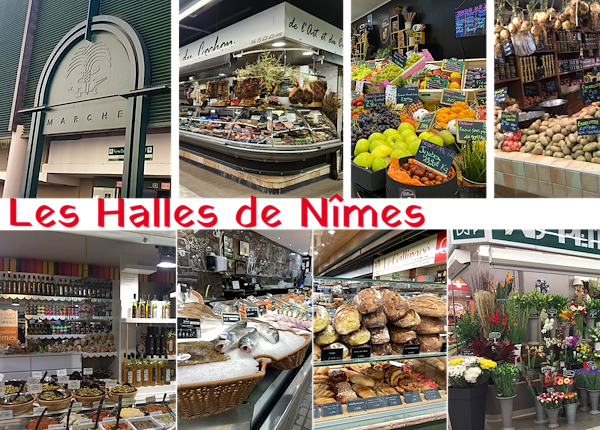
In central Nîmes, les Halles de Nîmes are much more than a covered market. They form a lively, everyday meeting place where smells, colors, and conversation come together.
A market rooted in 19th-century modernization
Les Halles were inaugurated in 1884, during a period of major urban development aimed at modernizing the city. The goal was to create a central, functional covered market adapted to the needs of a growing population.
The project was entrusted to architect John Monod and engineer Félix Beaujouan, both known for their work with metal structures—then widely used in market halls across France.
Construction began in 1883 and was completed the following year, a relatively rapid timeline for the period. The inauguration in November 1884 was marked by public celebrations, reflecting the importance of the project for the city.
From the outset, Les Halles became a central gathering place, closely tied to daily life in Nîmes.
Architecture between tradition and renewal
Originally, the building featured a metal framework typical of late 19th-century market architecture, designed for both durability and openness.
The Halles were significantly renovated between 1988 and 1991 under the direction of Jean-Michel Wilmotte. This transformation modernized the space while preserving its role and overall character.
One of the most noticeable elements today is the large glass roof, which brings natural light into the interior and creates a greater sense of openness.
A lively and sensory atmosphere
What defines Les Halles above all is their atmosphere.
Inside, the market is constantly animated: stalls display fresh fruits and vegetables, cheeses, cured meats, seafood, flowers, and regional products. Vendors and customers interact freely, giving the space a rhythm that is both dynamic and familiar.
The sounds, the scents, and the movement all contribute to a setting that feels active and grounded in everyday life—very different from a typical shopping center.
An authentic place of everyday life
Despite its modernized structure, Les Halles retain a simple and traditional character. Wooden stalls, small kiosks, and direct exchanges between producers and customers maintain a strong sense of authenticity.
This balance between architectural renewal and continuity of use is what gives the market its appeal. More than just a place to shop, it offers a direct experience of the city—one that reflects its daily rhythms and local identity.

