Aix-en-Provence: Provençal Elegance at the Heart of History
Located in southern France, just 30 kilometers (19 miles) from the Mediterranean, Aix-en-Provence is an iconic city exemplifying the Provençal art of living. Renowned for its historical heritage, refined architecture, and exceptional light, Aix has captivated travelers, artists, and intellectuals for centuries.
Founded in 122 BCE by the Romans under the name Aquae Sextiae, the city owes its origins to its thermal springs, which are still visible today. Over time, Aix became a major political and cultural center in Provence, particularly during the Middle Ages and the Renaissance, when it hosted the Parliament of Provence, making it the regional capital until the French Revolution.
The historic heart of Aix can be explored on foot, through a maze of cobblestone streets, shaded squares, and grand private mansions (former residences of aristocrats) from the 17th and 18th centuries. The famous Cours Mirabeau, a wide tree-lined avenue with fountains, symbolizes the city’s elegance and connects the old town to the Mazarin district, noted for its classical urban design.
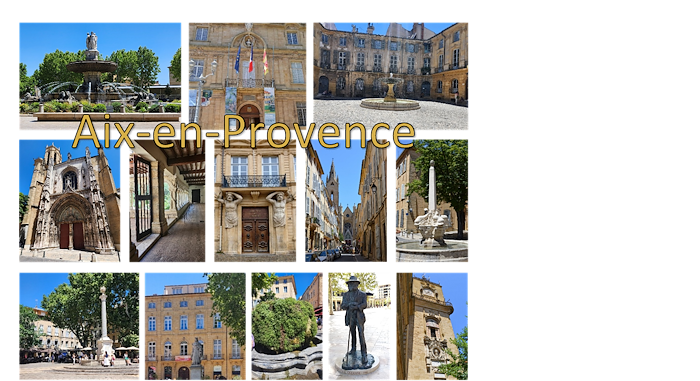
Aix-en-Provence is often called the “city of a thousand fountains”, due to the abundance of water and decorative fountains throughout the urban landscape, which testify to both its Roman heritage and architectural refinement.
The city is also inseparable from the painter Paul Cézanne, born in Aix in 1839. His work, inspired by the surrounding landscapes—most notably Montagne Sainte-Victoire—profoundly influenced modern art. Today, visitors can explore his studio, family home, and other sites that marked his artistic creation.
Modern-day Aix-en-Provence seamlessly combines historical heritage, a vibrant cultural life, Provençal markets, local gastronomy, and the relaxed Mediterranean lifestyle. It is an ideal destination to understand Provence’s history while enjoying an elegant and welcoming atmosphere.
Must-See Sites and Locations in Aix-en-Provence
Iconic Fountains
Aix-en-Provence is nicknamed the city of fountains due to the omnipresence of water in the urban landscape.
- La Fontaine de la Rotonde – Monumental fountain at the entrance of Cours Mirabeau
- La Fontaine des Quatre Dauphins – Iconic Baroque fountain in the Mazarin district
- La Fontaine du Roi René – Symbolic figure of Provençal history
- La Fontaine Moussue – Vegetated fountain emblematic of Cours Mirabeau
- La Fontaine des Neuf-Canons – Vegetated fountain fof Cours Mirabeau
Squares and Urban Spaces
Aix’s squares are lively gathering places, rich in history and architecture.
- Cours Mirabeau – Main avenue and popular promenade
- Place de l’Hôtel de Ville – Institutional heart of the city with the fountain
- Place d’Albertas – 18th-century architectural gem with its central fountain
- Place des Prêcheurs – Former medieval square, now animated by markets
- Place Richelme – Traditional Provençal market square with the Wild Boar Fountain
- Place Jeanne-d’Arc – Popular and lively square in the old town
- Place des Martyrs de la Résistance – Memorial and gathering space
Churches, Chapels, and Convents
The religious heritage reflects over a thousand years of history.
- Cathédrale Saint-Sauveur – Romanesque, Gothic, and Baroque styles
- Église Saint-Jean-de-Malte – First Gothic building in Provence
- Église de la Madeleine – 18th-century Baroque architecture
- Église du Saint-Esprit – Landmark in the historic working-class district
- Couvent des Prêcheurs – Testimony of the medieval period
- Couvent des Augustins – Religious and historical heritage
- Chapelle des Oblats – Discreet chapel in the old town
Museums and Cultural Sites
Aix-en-Provence is a city of art and culture.
- Musée Granet – Fine arts, classical and modern collections
- Atelier de Cézanne / Atelier des Lauves – Painter’s studio
- Pavillon de Vendôme – 17th-century art, gardens, and architecture
- Musée du Vieil Aix – Local traditions and history
- Musée des Tapisseries – Decorative arts in the former Archbishop’s Palace
- Jas de Bouffan – Paul Cézanne’s family home
- Hôtel de Gallifet – Art center and exhibitions
- Hôtel de Caumont – Centre d’Art – Private mansion and major exhibitions
Cézanne Heritage and Landscapes
- Chemin de Cézanne – Officially designated route, the painter’s last path
- Jas de Bouffan – Fundamental site in Cézanne’s artistic life
Civil Institutions and Historic Buildings
Symbols of political, judicial, and economic power.
- Hôtel de Ville – 17th-century building with the Clock Tower
- Palais de Justice – Neoclassical architecture and parliamentary heritage
- Halle aux Grains – Former commercial exchange center
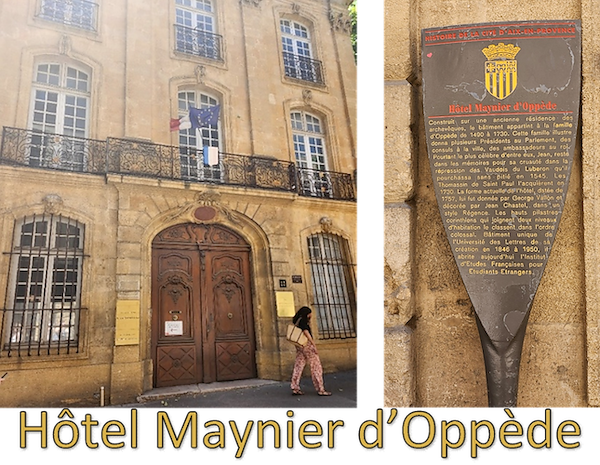
- Former private mansions – Reflecting Aix’s prosperity
Streets, Passages, and Urban Remains
- Passage Agard – Narrow passage typical of the old town
- La Tourreluque – Medieval vestige integrated into the urban fabric
Thermal Baths and Roman Heritage
The city’s ancient origins are still visible today.
- Thermes Sextius – Modern thermal center on the site of ancient springs
- Roman baths ruins – Witnesses to the founding of Aquae Sextiae
Memory and Contemporary History
- Camp des Milles – Major World War II memorial site
 Simple Travel and Recreation