
Pl. Gilberto Bosques
The Huveaune Aqueduct, a discreet witness of Marseille’s past
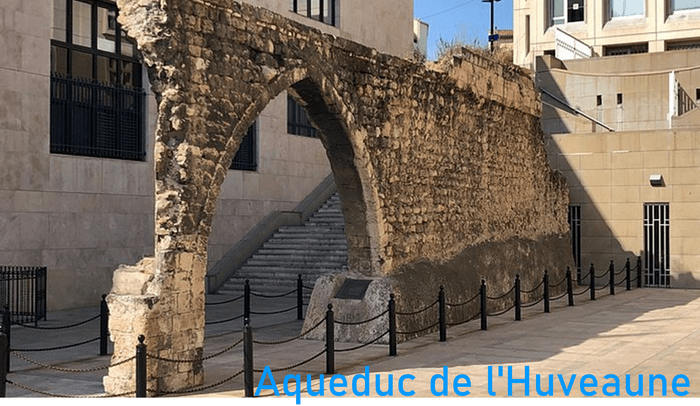
The Huveaune Aqueduct, little known to the general public today, is a vestige of hydraulic engineering that recalls the importance of water in the history of Marseille. Built in the 19th century, it was designed to channel water from the Huveaune River to supply the city during a period of demographic and industrial growth.
At that time, Marseille was undergoing major expansion: the development of the port, the rise of industries, and the massive arrival of new inhabitants required a much greater water supply than traditional sources such as the Durance or local fountains could provide. The Huveaune Aqueduct was therefore part of a broader plan to secure and diversify sources of drinking water.
From an architectural perspective, the structure impresses with its large stone arches spanning the Huveaune Valley. It stands as a fine example of 19th-century utilitarian architecture—robust yet elegant—combining technical efficiency with landscape integration.
Although the aqueduct is no longer in use for supplying water, it remains an important heritage site. It bears witness both to the vital needs of the city at that time and to the expertise of the engineers who helped modernize Marseille.
Listed in the local heritage inventory, the Huveaune Aqueduct is one of those discreet but essential monuments that tell the story of the city’s urban and hydraulic history.
The ruins of the aqueduct are located opposite the Porte d’Aix, a famous monumental gate in Marseille.
 Simple Travel and Recreation