
2-3 Cours Franklin Roosevelt
Saint-Vincent-de-Paul Church in Marseille: A Story of Perseverance
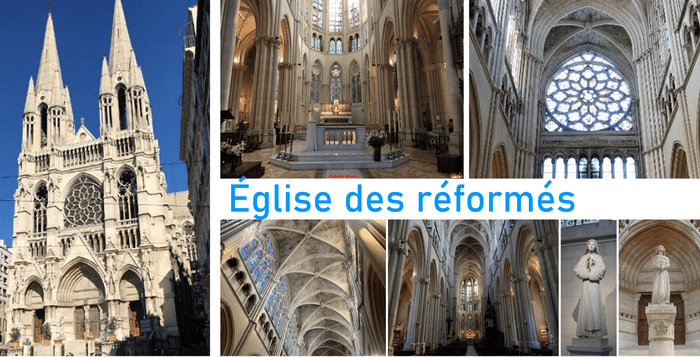
Saint-Vincent-de-Paul Church, also known as the Église des Réformés, is one of Marseille’s architectural jewels. Construction began in 1853 but faced several setbacks. The church was finally inaugurated in 1867 after more than 14 years of work, though its consecration did not take place until 1888—two years after its opening—marking the true completion of this long project.
A Majestic Neo-Gothic Style
The church stands out for its neo-Gothic style, inspired by great medieval cathedrals yet adapted to Marseille’s local culture. Architect Augustin Gonthier, who led the project, sought to give the building an impression of grandeur, symbolizing the city’s prosperity at the time. Its imposing façade, dominated by two square towers rising 40 meters high, embodies the strength and verticality characteristic of Gothic architecture.
The towers, both slender and imposing, frame the entrance and immediately create a sense of magnificence. Crowned with finely sculpted spires that meet in sharp points, they capture the essence of Gothic style. Their vertical lines draw the eye upward, symbolizing spiritual aspiration and elevation toward the divine.
The Bell Towers: Symbols of the City
Atop the two towers rise the bell towers, essential elements of Saint-Vincent-de-Paul’s architecture. With their slender shape and pointed spires, these bell towers are visible from afar, serving as landmarks for both locals and visitors. Their massive proportions and detailed stonework give the church a distinctive silhouette on the Marseille skyline. At more than 40 meters tall, they embody faith and perseverance, reminding all of humanity’s reach toward the divine.
The Great Rose Window: A Masterpiece of Light
One of the church’s most striking features is the great rose window above the main portal. With its impressive diameter, it ranks among the finest examples of Gothic art in Provence. Adorned with geometric patterns and colorful stained glass, it floods the interior with dramatic light. At certain times of day, the sunlight transforms the rose window into a luminous spectacle, casting a mystical atmosphere inside.
The vivid stained-glass panels depict biblical scenes while adding vibrant color to the façade. More than decoration, the rose window symbolizes divine light entering the sacred space, bridging heaven and earth and infusing the monument with a celestial aura.
The Doors: A Majestic Entrance
The bronze doors of the church form another remarkable element. Decorated with sculpted religious scenes from the life of Saint Vincent de Paul, they give the entrance a solemn and monumental quality. Massive yet finely detailed, the doors embody the neo-Gothic spirit that defines the entire structure.
The Interior: Gothic Splendor with a Provençal Touch
Inside, the church opens onto a spacious nave supported by slender Gothic columns. The vaulted ceiling is richly decorated, evoking the grace and lightness of classic Gothic cathedrals. Stained glass by the workshop of the Master-Glassmakers adds color and tells biblical stories, immersing visitors in an atmosphere of devotion.
The Chapel of the Blessed Sacrament, located to the side, features a marble altar adorned with finely detailed sculptures illustrating episodes from the life of Saint Vincent de Paul. Wooden carvings and liturgical furnishings highlight Provençal artistry, blending Gothic inspiration with local cultural influences.
The Gargoyles: Iconic Details
Like many Gothic cathedrals, Saint-Vincent-de-Paul features gargoyles carved with precision to drain rainwater from the roof. Practical yet symbolic, these fantastical figures—animals, monsters, and mythological creatures—enhance the church’s mysterious and imposing aura.
The Statue of Joan of Arc
At the entrance, a monumental statue of Joan of Arc welcomes visitors. Created in 1900 by sculptor Jean-Baptiste Botinelly, the bronze figure portrays her in armor, holding a sword in her right hand. Her determined yet gentle expression symbolizes both struggle and freedom, embodying French ideals. This later addition enriches the monumental and spiritual character of the church by connecting a historic figure to its sacred space.
Rediscovered Plans
The original architectural plans of Saint-Vincent-de-Paul, long thought lost, were rediscovered in the 2000s. This finding allowed for accurate restoration work, reinforcing the church’s authenticity and historical value. Thanks to these documents, architects were able to faithfully preserve the building’s neo-Gothic grandeur during conservation projects.
A Monumental Undertaking
Though its construction took decades, Saint-Vincent-de-Paul was envisioned from the start as both a religious hub and a symbol of Marseille. Its towering architecture, stained-glass artistry, gargoyles, and sculpted details make it a site of deep spiritual and historical resonance. The soaring vaults and meticulous decorations create a sacred space ideal for prayer, reflection, and wonder.
The Santonniers’ Mass: A Marseille Tradition
Beyond its religious role and architectural prestige, the church also hosts cultural events linking spirituality with Marseille’s traditions. Among them is the annual Santonniers’ Mass, held during the Christmas season. Dedicated to the artisans who craft the iconic clay figurines of Provençal nativity scenes, this mass blesses their creations while honoring both the birth of Christ and local craftsmanship. It remains a cherished moment of community, celebrating the unique identity of Marseille and its festive heritage.
 Simple Travel and Recreation