
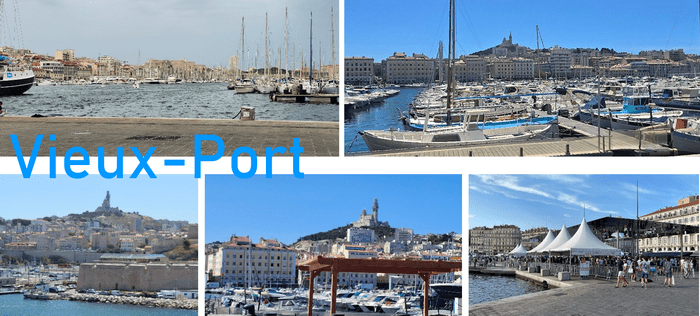
Central, open, and unmissable, the Old Port (Vieux-Port) has always been the focal point of Marseille. This is where everything converges: glances, footsteps, and boats. Around it, the city breathes, tells its story, and bustles with life. People set out to sea from here, they return, they stroll. It has long been a departure point for new destinations, but also the arrival point for generations of immigrants from Italy, Corsica, North Africa, and beyond — communities that shaped the city’s identity.
It is also a place of protection and strategy: Fort Saint-Jean and Fort Saint-Nicolas still frame its entrance, reminders of its military role. Today’s marina, with its lively quays, markets, and terraces, offers a peaceful promenade — but its calm masks a darker past.
In 1943, under German occupation, the Old Port district became the target of a massive reprisal operation orchestrated by the Nazis with the active collaboration of Vichy police. Seen as a hotbed of resistance and criminality, it was branded the “wart of Europe.” In January, more than 20,000 residents were expelled, 6,000 interned, and 1,600 deported, mostly Jews. In February, nearly 1,500 buildings were dynamited, erasing 14 hectares of the historic center. It was one of the most brutal acts of urban destruction in wartime France. Only a handful of emblematic buildings survived: City Hall, the Maison Diamantée, the Hôtel de Cabre, Saint-Laurent Church, and the cathedral.
But Marseille has a unique strength: the ability to rise again. The Old Port was rebuilt, reimagined, and reclaimed by its inhabitants. Today, it is once again the beating heart of the city — a place of life, culture, popular celebrations, and exchange. Its scars remain, but they only enhance its beauty.
Walking along the quays, watching boats sway, or sharing a pastis on a terrace, one understands why the Old Port is above all a symbol of resilience and hope. Under the mirrored canopy of the Ombrière, fishermen still sell their catch at the morning market, while the Ferry Boat continues its short crossing between quays — a tradition since 1880. It is also here that the Petit Train begins its scenic route, offering an easy way to reach the city’s monuments.
All around, landmarks stand within easy reach: City Hall, the Hôtel-Dieu, the Panier district, Saint-Victor Abbey, and the museums and fortresses at the harbor’s edge. Together, they frame the Old Port as Marseille’s stage — a place where history and modern life meet, and where the city reveals its truest self.
For an overview of Marseille, click here.
 Simple Travel and Recreation