
905 avenue De Lorimier
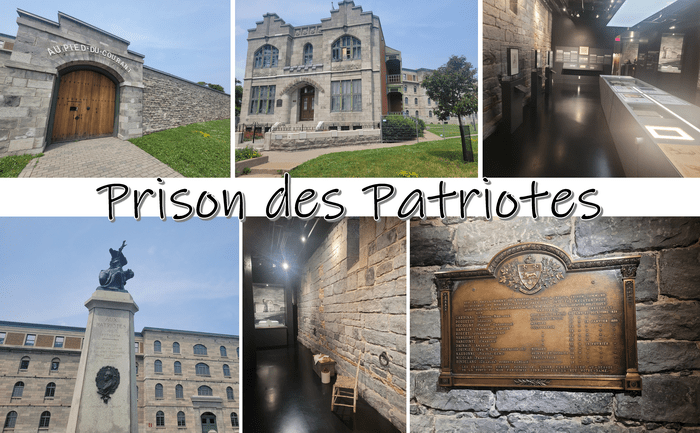
The Prison of the Patriotes, officially known as the Pied-du-Courant Prison, is a heritage site in Montréal, located near the St. Lawrence River and the Jacques Cartier Bridge.
The site also features the Monument to the Patriotes, a sculpture by Alfred Laliberté, and remains a powerful symbol of the quest for freedom and justice in Québec.
Construction and early years (1831-1840)
The Pied-du-Courant Prison was built between 1831 and 1840, following the penal reform principles of the time, which promoted the isolation of inmates and the improvement of their living conditions. Designed by architects George Blaiklock and John Wells, it is a notable example of Neoclassical architecture and remains one of the oldest surviving buildings of this style in Montréal. The prison officially opened its doors in 1836.
It is best known for its role during the Patriote Rebellions of 1837 and 1838, when it held hundreds of political prisoners — opponents of British colonial rule and supporters of greater autonomy for Lower Canada. Among them, twelve were hanged for high treason, including Chevalier de Lorimier, and over 150 were deported to Australia.
19th century – Montreal’s main prison
Until 1912, the prison served as the main detention center in Montréal.
There was a slight variation in detention conditions depending on the floor: prisoners considered less dangerous or who cooperated with the guards could be placed on the fourth floor, where the windows were slightly larger, allowing more natural light to enter. In contrast, inmates deemed more unruly were kept on the ground floor, in cells with very small windows. However, even these “better” cells remained very basic and far from offering any real comfort.
As Montréal’s population grew, the prison quickly suffered from overcrowding.
Decline and reassignment (1912-1978)
After the opening of Bordeaux Prison in 1912, the Pied-du-Courant Prison stopped housing inmates and remained unoccupied for nearly ten years. In 1921, it was repurposed to serve as the headquarters of the Société des alcools du Québec (SAQ). Several architectural modifications were made at that time, including the addition of a fourth floor, alterations to the roof, the construction of a new wing, and the partial demolition of the surrounding walls.
Heritage recognition and opening to the public
In 1978, the building was officially designated a historic monument, recognizing its architectural and historical significance, particularly its connection to the Patriotes Rebellions. In 2003, an interpretation center and museum were opened in the basement, allowing the public to explore the history of the Patriotes. In 2018, the SAQ closed a chapter in its history by leaving the building.
What remains of the original structure includes the main building, the facade, the entrance gate, and a portion of the surrounding wall—all reflecting the 1838 architecture.
The Museum
There is not a large tourist turnout, as it remains relatively unknown outside of Quebec’s historical or nationalist circles.
The exhibition is modest, a single room to visit, especially when compared to other history museums.
Today, the Prison des Patriotes is owned by the Société de développement des entreprises culturelles (SODEC) and Télé-Québec. It hosts exhibitions, commemorative events (notably on Journée nationale des Patriotes), and remains a quiet site of memory in Quebec’s history.
In summary
It is a site of historical and symbolic importance, but not a major tourist destination in terms of traffic, visibility, or experience.
Maison du Gouverneur
The Governor’s House, built in 1895 at 901 De Lorimier Avenue in Montreal, is a heritage building originally part of the Pied-du-Courant prison complex. It served as the official residence of Charles-Amédée Vallée, the last warden of the prison, and his family until the facility ceased operations in 1912.
This two-story stone and brick house features a restrained design with medieval-inspired decorative elements. It stands out for its discreet elegance and its role in Montreal’s penal and political history. The building has been part of a protected heritage site since 1978, which also includes the prison, its surrounding wall, and adjacent grounds.
Today, the Governor’s House no longer serves a residential or administrative purpose. Instead, it is used for cultural and heritage-related activities and remains an important witness to the memory of the Patriotes and to late 19th-century institutional architecture.
Other Patriotic Sites to Visit
For those interested in the history of the Patriotes and the Rebellions of 1837–1838, several other key sites across Quebec offer insight and commemoration:
- Saint-Denis-sur-Richelieu – Home to the Maison nationale des Patriotes, a museum dedicated to the movement’s leaders and legacy.
- Chambly – Features historical landmarks tied to the military and social context of the rebellions.
- Saint-EustSaint-Eustache – Quebecache – Site of a major battle in 1837, where visitors can explore the church and surroundings that witnessed a turning point in the uprising.
Each of these locations offers a unique perspective on the struggle for democratic reform in 19th-century Lower Canada.
For all posts on Montreal click here.
 Simple Travel and Recreation