
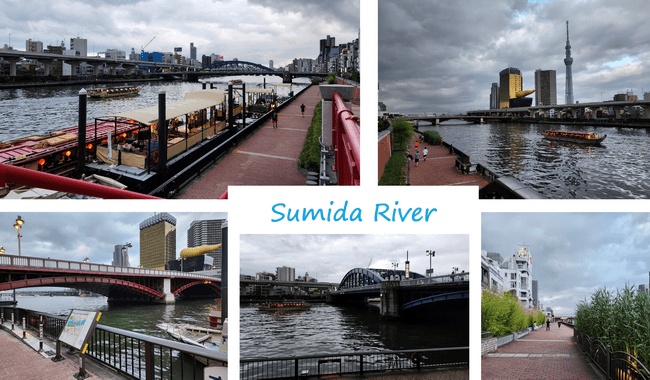
The Sumida River runs through several areas of Tokyo and, like many other bodies of water, was an important element in the city’s development. It was on the Sumida River on March 18, 628, that the Hinokuma Hamanari and Takenari brothers fished out the statue of Kannon that is now honored and worshiped at Senso-ji Temple.
The location of Senso-ji statue’s discovery is a sacred area. A decree issued in 1692 forbade fishing or killing fish or birds in some part of the river. The discrete Asakusa Kannon Kaisatsu no Hi monument is cultural property and is located on the site of Komagatado temple, next to Komagata Bridge overpassing the river.
With its 27 kilometers in length, the river banks are connected at least 37 times by bridges of different shapes. The relatively narrow river passes through Asakusa and Odaiba before reaching Tokyo Bay.
The riverside is accessible to the public through the development of a brick promenade and a park. The riverside is where you can see the summer fireworks (July) and in the spring, you can admire several cherry blossoms trees.
The park is also a good place to see the Tokyo Skytree and the original “flame” of the Asahi Brewery Company building. The riverside is well developed and, near Senso-ji, is one of the embarkation/disembarkation points for river shuttles and organized tours on the water.
For all my posts on Tokyo, click here.
 Simple Travel and Recreation