
Asakusa
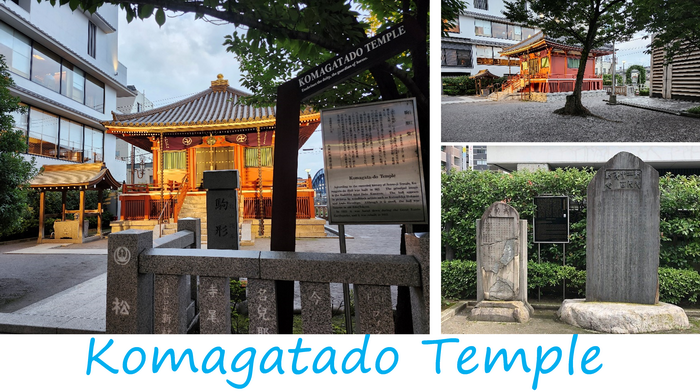
Honestly, in Japan, we should never underestimate the small simple temples, because they can be of real cultural treasure like the Komagatado temple which is directly linked to Senso-ji.
The story of Senso-ji was born from two young fishermen brothers who found a statue of Bodhisattva Kannon Avalokitesvara in the Sumida River. This statue would have been fished in 628 at the height where the Komagatado temple is located. The trace of the construction of the temple dates back to 942 AD. We can, therefore, understand its historical importance.
Facing the river, the temple experienced a surge in popularity during the Edo period and was rebuilt again and again following various destructive events. The temple now faces the street and is located near the Kamogata Bashi Bridge and was last improved in 2003.
The temple is dedicated to Bodhisattva Bato-kannon, the guardian deity of horses and is prayed to for the protection of animals and road safety. Homage is to the horse which was, for a long time, the main means of transport in the region.
Bodhisattva Bato-kannon is represented by a statue of Kannon with a horse head sculpture on top of his head. Unfortunately, to see the statue you have to wait until the 19th of each month.
The location of Senso-ji statue’s discovery is a sacred area. A decree issued in 1692 forbade fishing or killing fish or birds in this part of the river. The discrete Asakusa Kannon Kaisatsu no Hi monument is cultural property and is located on this site.
For all my posts on Tokyo click here.
 Simple Travel and Recreation