
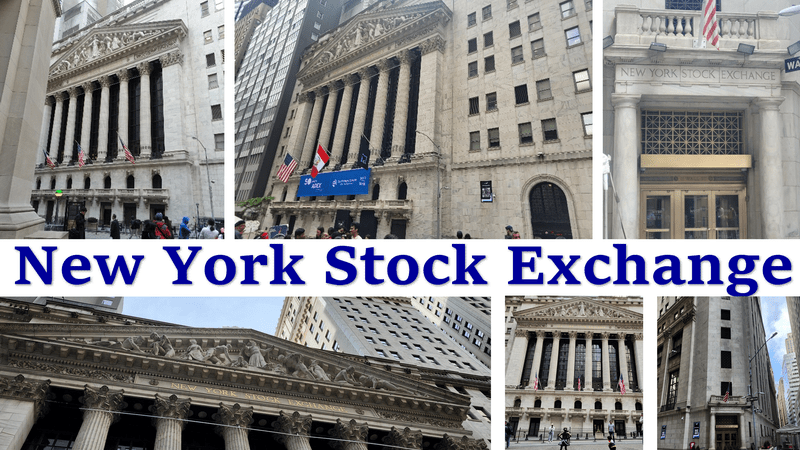
11 Wall Street + 18 Broad Street
The activities of the New York Stock Exchange are spread over two connected buildings: at 11 Wall Street for the administrative side and behind the doors of 18 Broad Street hides the famous fiery floor of the bustling New York Stock Exchange as we see it. Imagine it on weekdays. It is no longer possible to see this animation on site but we have a good idea. Seeing the stock market as a spectator was thrilling and at times grueling so experiencing it takes a strong heart to thwart the ups and downs of the market, multiple coffees to react so quickly, and having some sort of loophole to survive in the long run.
The financial heart of the United States has been seized by various events aimed at damaging its envious position. The 1920 bombing and the attacks of September 11, 2001, brought some security changes. The street is now pedestrianized, and a security perimeter with guards is around 18 Broad Street. Visits to the building have been suspended and metro access near the building closed.
On the architectural side, of all the sides of the building, that of Broad Street, the oldest (1903) is the most impressive with its 6 Corinthian columns and its detailed pediment of adult and child characters, some of them naked. Like a sacred place, the business center is protected by the air of a Greek temple.
The heart of this establishment is powerful. The palpitations are frequent and sometimes destabilizing. Blows to the global economy can be critical with billions of dollars at stake every day.
Historical events:
• September 16, 1920: Wall Street bombing. Although the investigation seems to show that the attack targeted the Bank of JP Morgan just opposite of the street, the entire financial industry of Wall Street was shaken by the explosion of a horse-drawn wagon. 38 people were killed and 143 were injured.
• October 29, 1929: “Black Tuesday” Wall Street stock market crashes spark the start of the “Great Depression of the 1930s”
• August 24, 1967: Bulletproof glass was installed in the visitors’ gallery after an activist threw dollar bills at the floor during a visit to the facility. This act is seen as a warning to improve employee safety.
• 1971: Start of NASDAQ
• 1970s: More common use of computers for stock trading
• February 28, 1982: Puerto Rican Terrorist Group (FALN) claiming the independence of their island detonated bombs in New York including in front of the stock exchange. Property damage was caused but no fatalities.
• October 19, 1987: One of the biggest one-day crashes. 500 billion dollars lost and the collapse of the markets. Programming error, the transaction rules have obviously been modified.
• December 14, 1989: Surprise installation of the “Charging Bull” in front of the Stock Exchange offices, but the same evening it was removed and moved to Bowling Green a few days later.
• September 11, 2001: The terrorist attacks occurred nearby. The market is closed for seven days to allow the removal of debris and the restoration of communication.
• September 2008: Significant stock market fall following poor management of subprime mortgages. In the United States, some houses are losing 30% of their value and the unemployment rate is jumping.
• December 2018: Movement of the Fearless Girl in front of the stock exchange. Originally dropped off on the eve of Women’s Day 2017 in front of the Bowling Green bull, some argue the statue of the powerful and fearless girl changed the bull’s message.
You can combine this visit with Federal Hall and, Trinity Church.
For all post on New York city click here
 Simple Travel and Recreation